
Humans make the best homepages. Now you can make one for every reader.
The best homepage has always been the one an editor builds by hand. The problem was never quality — it was scale. What if you could keep the judgment, but remove the bottleneck?
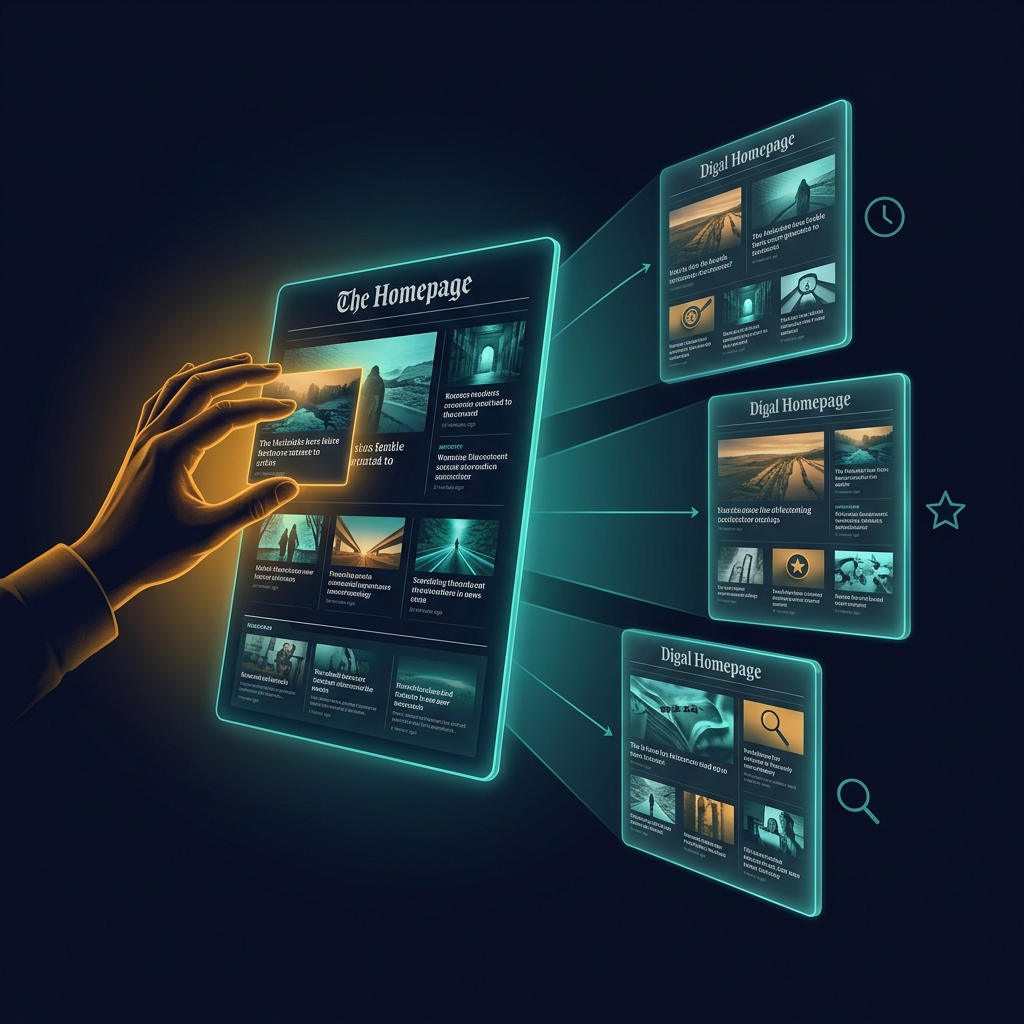
Editors still make the best homepages
We believe this deeply: a good editor makes a better homepage than any algorithm.
They know when a story leads. They understand when it's time to break the pattern. They feel the rhythm of the day — what matters at 7 in the morning versus what matters at 3 in the afternoon. They carry years of instinct and reader knowledge that no model can replicate.
No algorithm understands your readers the way your editors do. This is your greatest competitive advantage and what sets you apart from social media.
The editorially curated homepage is, and always has been, the gold standard. It's the version you'd put in a time capsule to show what your newsroom cared about on a given day. It's also the campfire — the place where your entire audience gathers to find out what matters most, every single day.
The impossible wish list
Now imagine you could build the perfect homepage — not just one, but one for every reader who walks through the door.
Each of these readers has a completely different context. They need a different hierarchy, a different mix of fresh and important, a different balance of depth and breadth. The ideal homepage for each of them is genuinely different.
The problem has never been quality. It's that humans don't scale.
What happens when you can only build one
When the entire newsroom shares a single homepage, compromises are inevitable. And they always tilt the same direction.
The homepage ends up optimised for the readers who visit most often — the loyal, high-frequency audience. Stories rotate quickly to keep the click-through rate high for people who've already seen everything. New content gets pushed to the top every hour, sometimes every few minutes.
Consider what this means for a reader who visits your site for the first time at 1 PM.
The morning's most important stories — the ones that defined the day — are already gone from the top of the page. They've been pushed down or replaced by fresher, lighter content. The homepage no longer tells the story of the day. It tells the story of the last 30 minutes.
That first-time visitor sees a homepage that wasn't built for them. Because it wasn't.
This is the fundamental tension: the homepage can serve loyal readers or new readers well. It can't do both at the same time — not when there's only one version.
Front Studio: every variant, still your voice
Front Studio changes the equation. Instead of asking "which single homepage do we build?", the question becomes: "what are the rules — and who gets what?"
You still make all the editorial decisions. You decide what's important. You decide what leads. You set the priorities and the guardrails. But Front Studio takes those decisions and creates the right version for each reader — automatically.
Think of it as having a thousand layout designers — each following your instructions exactly, but for a different reader.
You never lose control
This is the part that makes Front Studio fundamentally different from algorithmic feeds and recommendation engines. The editor doesn't hand over the keys — they get a bigger team.
The algorithm doesn't decide what matters. You do. Front Studio simply makes sure your decisions reach every reader in the most effective way possible.
What changes when every reader gets a homepage that fits
The effects are concrete and measurable:
But perhaps the most important change is cultural. Editors stop compromising between reader groups. They stop asking "who are we building this for?" — because the answer is: everyone.
Humans make the best homepages.
Now you can make one for every reader.